
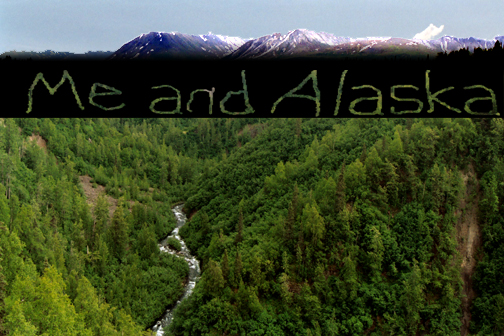
When I was born, I was named Anthony Joseph Rice. My name was supposed to honor the Alaska State Supreme Court judge who kept my parents from divorcing over a pickup truck –
The Honorable Anthony Joseph Dimond.
The Municipality of Anchorage, Alaska, in its infinite wisdom, also named a highschool after Judge Dimond – which I tried to burn down when I was 17. Someday someone will speculate I was angry at the municipality for naming a silly school after my namesake or angry at Judge Dimond for saving my parent’s marriage (which, by all rights, should have been allowed to die a natural death). I’ll clear up any debate right here by stating “neither – I was just plain angry and looking for someone to pay attention to me” (sort of like you’re doing now – except I can’t possibly know that, at this moment, you’re reading these words – which sort of defeats the purpose. Strange new world, cyberspace, isn’t it?…..) Oops, I’m getting ahead of myself.
I was going to tell you how a judge saved my parent’s marriage from falling apart over a pickup truck – until I rudely interrupted myself. Personally, I’ve always been more fascinated with the ‘why’. So why did Judge Dimond save my parent’s marriage? Beats me. Mom never told me. For now, though, you and I will have to settle for pure unadulterated speculation, the kind that thrived mightily in Alaska in the early part of the twentieth century. And that right there seems as good a place as any to begin telling how Tony Dimond’s timely words paved the way for the ones you’re reading now.
Now – I realize I hadn’t been born yet so I’m probably making selfish demands on your attention, traveling so far back in time simply to tell a story about me and Alaska. However, telling and listening to stories are two of those amazing human rituals that define us, particularly stories of hardship, sacrifice, miracles, devotion and hilarious mistakes dogging each generation’s steps while they stumble from infancy to elderhood. Lastly, for whatever it’s worth, I happen to think this one’s a good story. So I’ll do my best to keep your attention while I tell it.
Dad was born and christened Albert Paul Rice in a suburb of Boston on January 5, 1912, three months and nine days before the Titanic sank. His father was a transplanted Kahnawake Reserve Mohawk and his French Canadian/Algonquin Metis wife hailed from Norton, Vermont. I suppose there are worse combinations of heritage to inherit. After all, the French and Mohawk had managed to keep from attacking each other for nearly 250 years before the Oka uprising in 1990, and the Mohawk haven’t cannibalized any Algonquin warriors for over 300 years. Regardless, Dad’s parents probably didn’t concern themselves with the enormity of the peace their marriage made between the spirits of their ancestors. I’m sure they were more absorbed with simply keeping their kids fed, clothed and educated. Although Grandfather George Napoleon Rice worked hard as a construction supervisor in Bean Town, it is his wife, Josephine Mousette, whose performance as mother and housewife invites Olympic, if not Mythic comparisons.
You see, Dad always told me he was the last of Josephine’s thirteen children, a large litter even by early twentieth century standards. My nearest older sister (named after Josephine) has strongly and convincingly argued that at least 7 of those ‘children’ were more likely cousins regularly sent down to Boston by uncles and aunts back on the reserve.
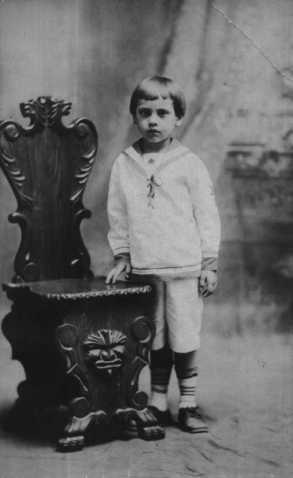
Regardless, Dad grew up speaking French at first, not English (and most certainly not Mohawk). He told me when he was six he would rise early every morning and walk with his sister down their Quincy dirt road to buy heating coal for their house from a vendor that drove slowly through their neighborhood on a horse-drawn wagon.
We humans have since been blessed with Shuttle disasters and smart phones. Only now do I comprehend Dad’s tears of incomprehension during the broadcast of Neil Armstrong stepping onto the moon. He was 57 that summer of 1969 and had already lived through the depression and two world wars. And now there were footsteps of men on the moon.
I got to see Dad’s childhood home in Quincy, MA back in 1982. Of course, by then, all the roads were paved and the houses heated by gas or electricity. Still, I sensed his early childhood wasn’t altogether an unpleasant one. His parents loved him and he had twelve siblings, which must have contributed to his perception that ‘family’ meant ‘large’. He also learned (perhaps from his siblings) of the gold rush in the Yukon and read of the adventures of the sourdoughs. Those stories clearly planted the seed that would compel him in later years to follow those sourdough’s footsteps. In the meantime, there were the usual travails of childhood: e.g. fighting with his nearest aged sister over their shared violin until it broke, predictably heralding an end to violin lessons for them both. In one of the more curious turns of fate, Dad and all members of his family appear to have passed safe and untouched through the tragedy of World War I. Not until he turned eleven did Dad encounter deep pain and loss. It was the year 1923 when he lost his mother Josephine Mousette Rice to influenza, and later that year George Napoleon Rice, Kahnawake Mohawk, 4 generation descendant of a reknowned warrior and clan chief, went looking for his wife on the other side. Grandfather George was 59 years old but Dad said his father died of a broken heart.
Perhaps if, afterward, Dad had been provided a loving home with nearby relatives things might’ve gone a little smoother for him. Instead, a few days after watching his father’s burial in a plot beside his mother’s in Worcester, he was shipped off alone on a boat full of strangers to live with an older sister and step-brother in Hawaii. On his third day south from Boston toward the Panama Canal Dad’s spirit finally broke. One of the deck hands caught him trying to end his pain by jumping off the boat. Dad was eleven years old. The Captain ordered him quartered in his own cabin with 24/7 adult supervision and all the food he could eat. By the time he made land on the largest of the fabled Sandwich isles, Dad had put on thirty pounds. Nowadays we have cruise ships and activity stewards. Perhaps if Dad had patented his discovery we’d be billionaires by now – or at least have lifetime free travel on some Cuinard Class boat in the Bahamas. Sigh.
Doesn’t pay to cry over spilt milk, though. Karma is karma and some things simply have to be rectified. It’s cosmic law. Of course, this was long before Ram Das waxed eloquent (if not sober) on such relevant topics and so Dad was destined to discover this lesson the hard way. For awhile though, Dad spent what remained of his childhood on the Big Island running barefoot through nearby farming villages trying to recover some joy in life. His bare feet grew so calloused from running he could painlessly stamp out cigars with his bare big toe . His skin darkened until he was indistinguishable from the natives he eventually worked beside in the pineapple fields.
Meanwhile, in March of 1922, a child had been born to Portage, Wisconsin’s struggling vaudeville impresario and future Madison barrister Lucius Squire and his wife of two years, Nathalie. They named their daughter Rosemary. Mom once drove me around through Portage, showed me where her house was (it’s still there), and where she walked to school. She showed me the house of an elderly former southern plantation slave that her mother, Nathalie, had cared for until he died of old age right there in Portage (his house is still there too). Mom told me of accompanying her mother to his house and seeing the scars on his back, grim testimony to his former life. She told me of her parents separation early in her childhood and their subsequent divorce. She told me of being stigmatized in the late twenties and into the depression as a ‘child of divorcees’ – “one doesn’t play with such children”. Mom survived by discovering books – including the fabled Tarzan and Wizard of Oz series. Mom also told me of how her and her mother survived the depression by running boarding houses in college towns across the midwest, of mixing yellow food coloring into the chalk-white government-issued margarine blocks their ration tickets procured.
It was in the late thirties that Mom’s father, Lucius, remarried, taking as his bride Cleone Byrne. Lucius had passed the Wisconsin Bar Exam during the Depression via assistance from a Ringling Bros. relative. He began practicing law in Madison. With that consequent stability, Mom moved in to begin her college education at UW. Given her passion for reading and her studiousness, it was predictable that her grades would be perfect.
Sadly, the stigma of her biological parents’ divorce remained in force. Sororities approached to pledge her for the benefit her perfect GPA would garner them. However, they were all too quick to remind her that children of divorcees still weren’t ‘socially acceptable’. In no uncertain terms was she discouraged from presuming sorority membership might land her a husband from one of Madison’s ‘society’ families. To which she, in no uncertain terms told them they were most welcome to dispose of their sorority invitations in those places on their personage where the sun most gratefully doesn’t shine. Pride intact, Mom completed her BA in English and made plans to pursue a graduate degree.
Out in Hawaii meanwhile, Dad’s alleged incorrigibility (in the eyes of a less than sympathetic step-brother) led to his compulsory enrollment in the Gulf Coast Military Academy in Gulfport, Mississippi when his sister and brother-in-law moved there. He spent a number of summers during the Great Depression working as a hired hand in the local wheat fields. It was the only work his much darkened Native and Hawaiian sun-darkened skin would permit that the time – alongside African-Americans.
Shortly after WWII’s advent, his stepbrother’s intermediation secured him work at the Higgins Boat factory in Gulfport, Mississippi. He met and married a woman, Louise, who bore him a daughter, Alda and son, George. The marriage survived only two years. Simultaneously, a series of increasingly skilled war-time positions led to sheet metal layout and assembly work at the super-secret Hanford plant, one of the nuclear material refining pillars of the Manhattan Project.
Meanwhile, Mom had continued correspondence with her mother Nathalie, living and working in Eastern Washington State. When Mom found herself schafing under her increasingly (if somewhat paradoxically) class-conscious father’s will, Mom headed west and got a job as a telephone operator at the same Hanford construction site where Albert Paul Rice was bending sheet metal. Decades later, Mom told us kids of the omnipresent and heavily armed guards and attack dogs and, in particular, of the emergency evacuation call list instructions she was drilled with almost constantly.
Still chilling today were her instructions indicating that, after completing the evacuation calls, “if there was still time” she was at last free to board any remaining bus to evacuate herself. She had no idea what the purpose of the plant was and no one talked of it for conversations were indeed being monitored. There had been enough instances of individuals speculating aloud one day and having vanished the next or, occasionally, actually being seen ‘removed’ by FBI agents – never to return. It was wartime.
Regardless, here we are. The stage appears set for them to meet. However, let’s digress momentarily and wander back to the landing craft factories in Gulfport, Mississippi. For it was here, two years earlier, that we learn Dad had managed to make occasional leisure trips to New Orleans. During one such he discovered and fell in love with opera. Conversely, while in college, Mom had always been profoundly moved by the classic symphonists. She spent countless hours in college listening to Madison radio broadcasts of Fritz Reiner and the Chicago Symphony Orchestra.
However, lest one conclude my father magically transformed himself in two years from rake to polished and cultured gentleman with his musical forays to the Big Easy, you’re better served noting his early attendance of the opera house often found him propped against the brass rail by the orchestra pit during overtures and staring, premeditatively and shamelessly at the brass section while sucking on a lemon. Apparently Dad didn’t feel he’d gotten his money’s worth out of an opera ticket until he’d made at least one brass player utterly obliterate a section of fanfare from a rapid and sudden onset of salivation. Sigh…….that was my Dad.
Well, enough of that. We’ve arrived at a fulcrum point. You see, it’s important to remember that, in wartime and in the desert of Hanford, WA, culture for the workers wouldn’t have seemed like a priority. Still, this was Uncle Sam’s party; plans were drawn up to provide recreation that didn’t require hangovers or some other form of penance or hospital convalescence. One measure led Mom and Dad to simultaneously discover in off-shift hours that Hanford’s laughable reading library had been compensated with a respectable classical and opera listening library.
So, this is where the half-breed Mohawk sheet metal worker discovers the lovely and well-read (if not ‘well-bred’) barrister’s daughter. They would soon also learn how complementary their tastes were: Dad’s love for opera and Mom’s passion for the symphonists. We’ll assume Dad didn’t share his recollections of conductors’ tirades against seemingly witless pit orchestra brass musicians until much later.
Let’s skip ahead a few weeks and espy the two one snowy night as they walked from the listening library back to the worker’s (yes, gender segregated) barracks. It was time and Dad made his move. The resultant kiss is enshrined in the memories of me and my siblings as ‘the kiss that made Mom drop all her books in the snow’. Enough snooping. We’d best depart and allow the two the modesty a little privacy might afford them.
By August 1945 the two are now married, living in Seattle. Dad works while Mom cares for her firstborn, Rosemary, Jr. When the radio announces the destruction of Hiroshima, and then Nagasaki a few days later, by new special weapons, my parents finally understand what they had been working on. Before Mom crossed in 2005, I had asked her how she felt when she heard the news. Given our post-9/11 fear and detestation of any kind of weapons of mass destruction it might be difficult to sympathize with her succinct expression of relief and gratitude: “it meant the end of the war”. Lest we be too harsh though, we should recall that, in the summer of 1941, all the boys in her high school graduating class had enlisted in the National Guard, anticipating difficulties in the Pacific. Immediately after the Pearl Harbor attacks, most of Wisconsin’s guard units shipped out to defend the Philippines. Those that had survived the siege of Corregidor and were captured suffered the ‘long walk of Bataan’ during which thousands more of them were killed or died of their injuries. Only two boys from Mom’s entire graduating class survived the camps and the war.
When I was an adolescent, I remember reading a Japanese prison camp notification card from the Red Cross for one of the young men from her class. Remembering that card made my mother’s unspoken burden tangible. She’d read that card and, to her, it represented a living person she knew as a boy in school. It’s a curious aspect of human nature that, left with only numbers and statistics, we’re unable to feel much of anything about such tragedies.
Not until we touch, feel and see something of the tangible does our imagination make real the human being that no longer walks the earth with us. It’s a loss perhaps better imagined today by combining the tragedy of a mass school shooting with the horror of 9/11 – and then visit it in myriad ways upon countless families across America – for four years. A testament to the strength of character of my mother’s generation is how often they simply chose to endure and move on. Up until her crossing Mom never spoke of those boys unless asked. I imagine she saw it as a burden that was hers alone to carry. Sadly, I have come to conclude she was right.
Given their proximity to Alaska while living in Seattle, it was inevitable that Dad’s childhood wanderlust would awaken when he heard the Defense Department was offering more work in Anchorage. I had always conjectured Mom and Dad had wanted to ‘run away from civilization’ after they’d discovered the true nature of the project they’d helped at Hanford. But that’s pure fantasy. Simply put, Dad had a family to support and the work to build Fort Richardson in Anchorage was paying well.
So, in 1946, Dad took the 36 hour island hopping seaplane flight from Seattle to Anchorage (it takes three and a half hours today). Barracks were again the order of the day for him and later for Rosemary senior and junior when they arrived. Married contractor barracks didn’t really offer much in the way of living condition improvements for any of the couples living there and so began an earnest search to find lodging off-base.
Mom and Dad’s first home was a small log cabin approximately three miles from the base and at the edge of Anchorage. None of my siblings know much of that time (Mom describes it as either “not very pleasant” or “a lot of hard work”). She told one time of washing diapers by hand in an aluminum washtup, that they had a hand pump outside for well water and no plumbing. Imagine stepping outside into knee deep snow or sub-zero temperatures to pump water by hand for dishes, for cooking, for bathing – alone.
So within a few short years, Mom and Dad had saved enough to buy 40 acres of wilderness seven miles south of Anchorage and began making plans to build their own house there. Only one other fella got out there a few months before Dad. Our neighbor’s name was Lester Klatt. He’d started building his log cabin on the standard homestead allotment of 160 acres.
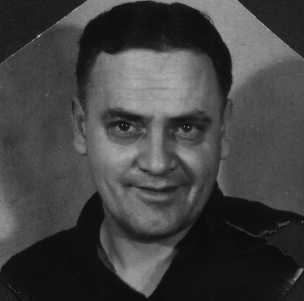
By the time Dad had assembled enough to start a foundation, Les had bulldozed a rough one lane road through the woods to his property – which happened to pass right in front of our own. Today, it is now called Klatt Road. Back then it connected with the gravel highway that ran from Anchorage to Seward – the Old Seward Highway.